Empowering Your Journey With Expert Assist
The Real Battle in AI Isn't the Model — It's the "Harness"
The Real Battle in AI Isn't the Model — It's the "Harness"
Learning and Education
General Learning and Skill Development

AP/
.
Follow
6 min read
.
2 months ago
Why Trust Us
We uphold a strict editorial policy that focuses on factual accuracy, relevance, and impartiality. Our content, created by leading industry experts, is meticulously reviewed by a team of seasoned editors to ensure compliance with the highest standards in reporting and publishing.
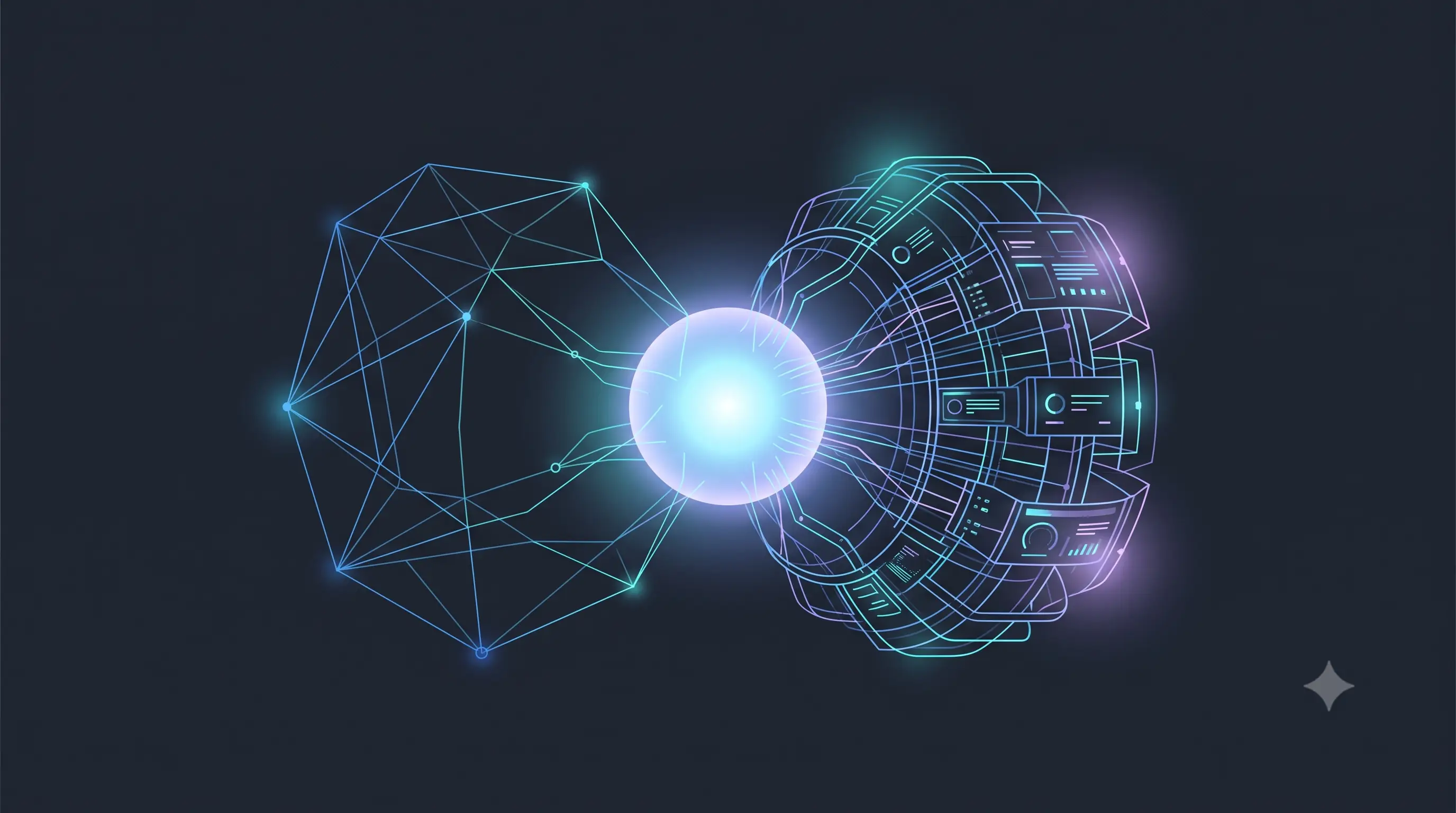
For the last couple of years, the AI conversation has mostly been about models: which one scores highest on which benchmark, which one is cheapest per token, which one "feels" smarter. But if you talk to the engineers actually building AI products, a different word keeps coming up: harness.
A harness is the software wrapped around a model — the layer that decides what the model can see, which tools it's allowed to touch, and how it presents its answers back to you. The model is the engine. The harness is everything else: the steering wheel, the dashboard, the seatbelt.
And right now, that layer is where OpenAI and Anthropic are fighting the real battle for who gets to run your digital life.
From coding tools to everything else
Agentic AI — tools that don't just answer a question but go off and do a multistep task on their own — started with software engineers. Coding is a uniquely good fit for this: the output is verifiable (code either runs or it doesn't), the tasks are well-documented across the internet, and developers were already comfortable working through a command line.
That's why the first wave of breakout agentic products were coding assistants. They let people describe what they wanted in plain English and got a working feature back, instead of writing every line by hand.
The next frontier — the one every major lab is chasing now — is everyone else. Accountants, marketers, analysts, ops teams, doctors. People whose jobs revolve around email, spreadsheets, Slack, and a dozen SaaS tools that were never designed with AI in mind. Turning a coding agent into something a non-technical employee can trust with their inbox and calendar is a much harder design problem than it looks.
Two different bets on how AI should behave
The interesting part isn't just that labs are chasing this market — it's how differently they're approaching it.
One school of thought treats the model as something that should be trusted to just handle things. Give it broad access, a task, and get out of the way. It's a bet that models are already smart enough that heavy scaffolding is unnecessary — and that any hand-holding you build today will be obsolete once the next model ships anyway. This is sometimes called being "AGI-pilled": optimism that raw model capability will outrun the need for careful product design.
The other school leans into friction, on purpose. Instead of disappearing into a task, the agent checks in — surveys the options, proposes two or three paths forward, waits for a decision, does a chunk of work, and checks in again. It's slower and more conversational, but it leaves less room for the model to quietly go off the rails on something you'll only notice later.
Neither approach is obviously "correct." The check-in style tends to build more trust early on, especially with people who are new to letting an AI touch their real accounts. The hands-off style can feel more magical when it works — and more alarming when it doesn't.
The permissions problem nobody's fully solved
Here's the part product demos gloss over: getting an agent connected to your tools is still clunky.
Granting "read-only" access to a calendar or cloud drive often isn't actually an option in practice — plenty of integrations quietly require full read/write access to function at all, regardless of what the user actually wants to share. Settings are frequently split across a web app and a mobile app, so you end up toggling permissions in two places to get one workflow running. And once an agent is connected, the boundary between "helpful context" and "information it had no business reading" gets blurry fast — a request to draft a document can pull in a private message thread the model was never supposed to touch.
This is the unglamorous, unresolved problem sitting underneath every flashy agent demo: trust doesn't scale as fast as capability does.
Why "just let the model do it" is a harder sell for normal work
Code has a property almost no other job has: it's checkable. It compiles or it doesn't. Tests pass or they fail. That built-in feedback loop is a huge part of why coding agents got good so fast — there's a clear, automatic signal for "did this work."
A sales pitch, a business strategy, a client email — there's no compiler for that. Two reasonable people can disagree about whether an AI-drafted memo is actually good. That ambiguity makes it much harder to build reliable benchmarks, which makes it much harder to know if a new harness or model update is actually an improvement for non-technical work — as opposed to just an improvement on a coding leaderboard that doesn't transfer.
This is arguably the biggest open problem in making agents useful outside of engineering: not "can the model do the task," but "how would anyone know if it did the task well."
The lock-in question
There's also a less flattering explanation for why every major lab wants you inside their harness specifically, not just using a model: control.
If a lab only sells access to a model, it's a commodity business — compete on price and benchmark scores against every other model provider, including cheaper open-weight competitors. If a lab owns the harness — the app, the integrations, the permissions, the history of your workflows — it owns the relationship. Switching costs go up. That's not a criticism unique to any one company; it's the standard playbook of platform businesses, applied to AI.
Open-source and independent harness builders have pushed back on this framing, arguing that a genuinely minimal, model-agnostic harness can outperform a heavily branded one on the same underlying model — suggesting that at least some of what labs are selling is lock-in dressed up as user experience, not raw capability.
So which approach wins?
Probably neither, cleanly. What's more likely is a split:
- Power users and technical teams will keep gravitating toward minimal, transparent, model-agnostic harnesses where they can see exactly what's happening and swap the underlying model whenever a better one ships.
- Mainstream, non-technical users will keep preferring the "magic box" — fewer decisions, more hand-holding, a friendlier on-ramp — even if it means less visibility into what the agent is actually doing or spending.
The real story isn't which lab wins. It's that the harness — not the model — is quietly becoming the product. The model is increasingly a commodity that gets swapped out every few months. The thing that decides whether you trust an AI with your inbox, your calendar, and your Slack messages is the layer of design choices sitting on top of it — and that layer is still very much being figured out, by trial and error, on real users, right now.
Have thoughts on which approach you'd trust more with your own workflow — the hands-off agent or the one that checks in constantly? I'd genuinely like to hear it.
Read Full Story

Stay Updated with AssistPedia
Get weekly insights on AI tools, expert consultations, and industry best practices delivered straight to your inbox. Join our growing community of professionals.
- Weekly articles
- Stay updated with our weekly articles covering the latest tech trends, programming tutorials, and industry insights.
- No spam
- We respect your inbox. You'll only receive relevant updates about our platform and services. No promotional spam, ever.
Products